

Pilot Operated Relief Valve or Direct Acting: Two Forklift Makers, Two Choices, No Complaints
9 min read
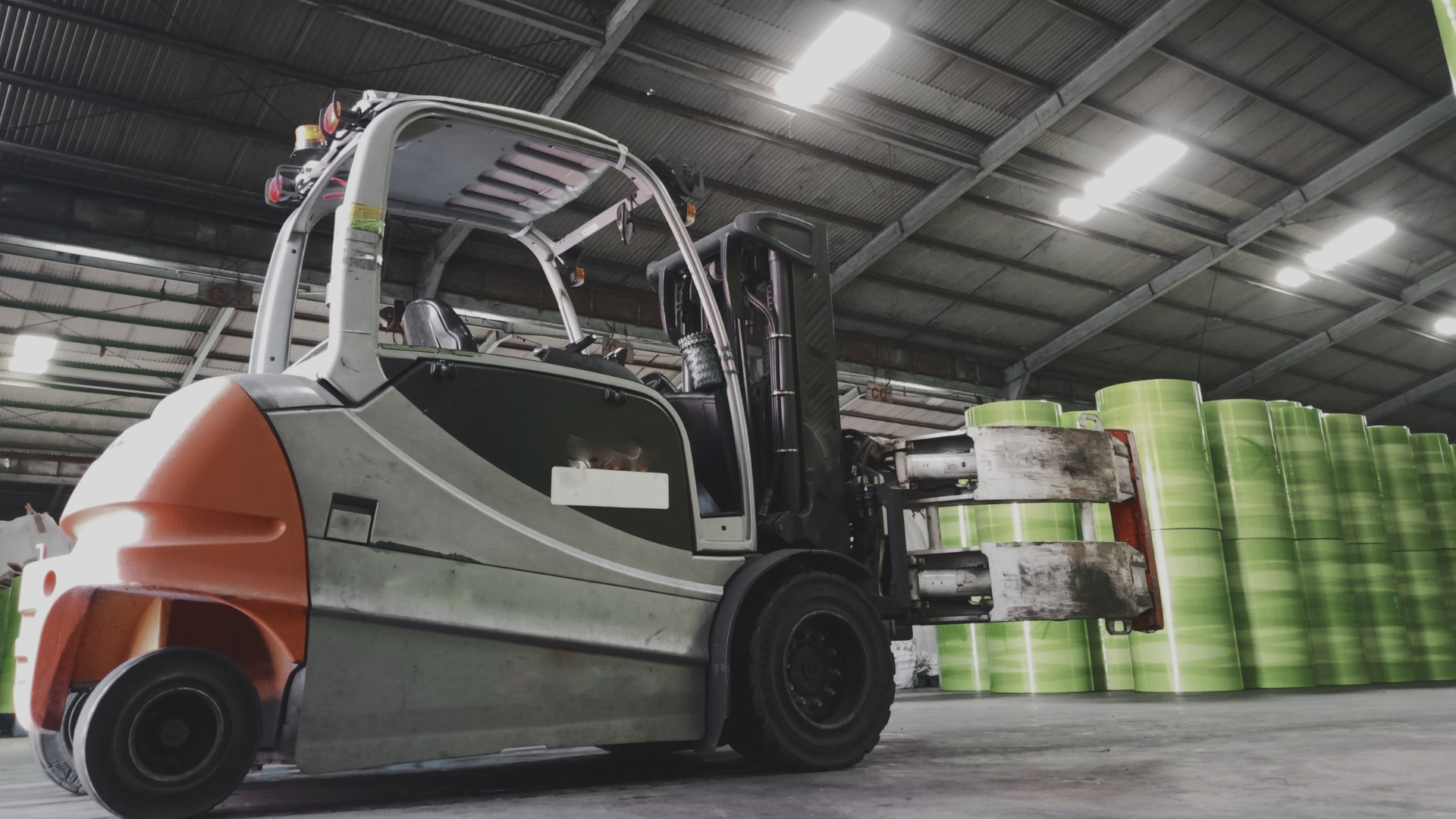
Two (amongst many) forklift makers buy relief valves from us for the same job. Both use them to protect attachments, and in this case, a bale clamp attachment. The system flow is at about 35 lpm and 210 bar. One OE fits our DR10 series, a direct acting relief valve. The other OE fits our AR10, a pilot-operated relief valve. Neither has given us a major complaint in the last 25 odd years.
So is a pilot-operated relief valve always the better choice? No. On a lot of real jobs, both types do the work. What decides it is how often the valve opens, how much flow it passes when it does, how much room you have in the manifold, and how well the machine’s oil is looked after.
Most articles on this topic stop at the textbook comparison. I want to go one step further and talk about where the textbook advantages actually show up on a machine, and where they don’t.
How does a direct acting relief valve work?
A direct acting relief valve is a poppet or ball held on its seat by a spring. System pressure pushes on one side; the spring pushes on the other. When pressure beats the spring, the poppet lifts and oil goes to the tank. One moving part senses the pressure and passes the flow.
That makes it simple and quick. With only one moving part, it can open fast and clip a pressure spike before it does damage. The NPTEL hydraulics course notes from IIT make the same point.
The weak spot is the spring. To pass more flow, the poppet has to lift further. That squeezes the spring harder, so the pressure climbs above the setting as the flow goes up. This climb between cracking pressure and full flow pressure is called override. More on it in [LINK: topic 14]. At high flow, the override gets large, and the spring and body get large with it.
How does a pilot operated relief valve work?
A pilot operated relief valve splits the job in two. A small pilot stage decides when to open. A main stage does the heavy lifting.
On our AR10, the main stage is a piston in a precision barrel. The piston has a small calibrated orifice through it. Oil from the pressure port flows through that orifice to the back of the piston, where a small ball and spring pilot sits. In normal running, pressure is the same on both sides of the piston, and a light spring keeps it on its seat.
When system pressure crosses the pilot setting, the ball lifts. About 2 to 3 lpm of pilot oil starts flowing through the orifice to the tank. Flow through an orifice means a pressure drop, so the back of the piston now sees less pressure than the front. That difference lifts the piston, and the pressure port opens straight to the tank. The main stage on our AR10 range passes up to 60 lpm, while the pilot only ever handles those 2 to 3 lpm.
When pressure falls below the setting, the ball reseats. Flow through the orifice stops, pressure equalises across the piston, and the light spring pushes it home.
Because the main spring only has to be light, the pressure barely climbs as the flow goes up. Low override is the main reason people choose this design.
Pilot operated relief valve vs direct acting: what each does better
The textbook comparison is mostly right. A pilot operated relief valve has much less override because it uses a much softer spring. It is also slower to respond because it opens in two stages, and it is more complex to make. The Taylor and Francis engineering summary sets these trade-offs out clearly.
From what I see on our own range, there is one more difference that the textbooks give less weight to. For the same job, the AR10 is about half the size of the DR10. In a crowded manifold, that matters.
What the textbook comparison misses is duty. It reads as if every relief valve spends its life wide open at full flow. Most relief valves on mobile machines don’t. They sit closed almost all the time and open for a moment when something reaches the end of its stroke.
A case from two forklift makers
Both customers build forklifts, and they compete with each other, so I will keep them both unnamed. Both fit a bale clamp attachment. When the clamp closes on a bale and the cylinder reaches the end of its stroke, pressure climbs, and the relief valve opens. Flow is about 35 lpm, and the setting is about 210 bar.
One maker fits our DR10. The other fits our AR10. Both work. We have had no major complaints from either.
From where I sit, I notice two differences between them. The first is size. The AR is about half the size of the DR10, and the AR10 customer’s manifold looks cleaner for it. To be fair, a direct acting valve could sit in the same manifold with the same piping. The difference is the space it takes up, not how it is plumbed.
The second difference is the oil. The AR10 customer builds a more premium machine, and their customers are more careful about cleanliness and contamination. The DR10 customer’s machine is a more everyday product, and upkeep is lighter.
I don’t know exactly why each one chose what it did. Those are the differences I see.
Why both valves work on a bale clamp
The relief on a bale clamp opens once per cycle. The clamp closes, the cylinder bottoms out, the relief cracks for a moment, and the operator lets go of the lever. Then it shuts again. It never passes full flow for minutes on end.
Override matters most when a relief valve runs open for long stretches. Higher pressure for longer means more heat in the oil and more stress on everything upstream. When the valve only opens for a moment at the end of a stroke, a few extra bar for a second or two make little difference.
Some rough numbers. At 210 bar and 35 lpm, a relief valve turns about 12 kW into heat while it is open. That sounds like a lot, until you remember it lasts a second or two per cycle. A relief valve doing that continuously would be a very different story. And 35 lpm is clearly well within what the DR handles, or our direct acting valve customer would have told us by now.

So what decides it?
On a job like this, three things.
The first is space. If the manifold is tight, the smaller pilot operated valve makes the layout easier. If there is room, the direct acting valve does the job just as well.
The second is how the oil is looked after, and this is the one I would weigh most. A pilot operated valve depends on a small orifice through its main piston. I have seen pilot operated valves malfunction when that orifice gets blocked. A direct acting valve has no orifice like that to block. On a machine where the filters get changed when someone remembers, the simpler valve is the safer bet. If you want to know how clean your oil needs to be, see [LINK: topic 33].
The third is the duty, which brings me to the cases where the choice really does matter.
When does a pilot operated relief valve really matter?
Pick a pilot operated relief valve when the valve will pass high flow, when it will stay open for long stretches, or when the components downstream can’t take much pressure rise.
Take two valves that both crack at 250 bar. One reaches full flow at 255 bar, the other at 290 bar. On a main system relief that opens often, that 35 bar gap changes the stress on every component, the heat going into the oil and how you size the pump. That is where a pilot operated relief valve earns its place.
Where to set the relief in the first place is covered in [LINK: topic 11]. If a relief is screaming or chattering, see [LINK: topic 13]. If you aren’t sure you need a relief valve at all, and not a reducing or sequence valve, see [LINK: topic 12]. And if the relief is part of an unloading circuit, read [LINK: topic 51] before you pipe the tank port anywhere other than the tank.
Our direct acting range is here: [LINK: product page – DR direct acting relief valve]. Our pilot operated range is here: [LINK: product page – AR Series pilot operated relief valve].
FAQ
Is a pilot operated relief valve better than a direct acting one?
Not always. It has less override and is smaller for the same flow. On an end of stroke relief at moderate flow, a direct acting valve works just as well and has no small orifice to block.
Why does a pilot operated relief valve stop working properly?
In my experience, a common cause is a blocked orifice in the main stage. Check how clean the oil is before you blame the valve setting.
Which relief valve should I use on a forklift attachment?
If the relief only opens at the end of the stroke and the flow is moderate, either type will do. Choose on manifold space and on how well the machine’s oil will be looked after.
Does a direct acting relief valve respond faster?
Generally, yes. It has one moving part, while a pilot operated valve opens in two stages.
What is pressure override?
It is the rise in pressure between the point where a relief valve cracks open and the point where it passes full flow. See [LINK: topic 14].
Choosing a relief valve?
Send us the flow, the setting, how often the relief opens, how much space you have in the manifold, and how the machine’s oil is looked after through our technical enquiry form. We will tell you which valve we would fit, and why.
Raj Dabholkar is the Technical Director of Tucson Hydrocontrols, a hydraulic cartridge valve maker in Umbergaon, Gujarat, founded in 1987. A jet propulsion engineer by degree and a hydraulic design engineer by trade, he has spent over 20 years designing valves and solving field problems with OEMs in construction, defense, earthmoving, power generation, agricultural, and industrial equipment.